Home Blog Page 208

What is Wrong With Gold?

0

Kal Kotecha PhD

I am loving this correction!

I am relishing the fact that gold and gold stocks are ‘correcting’ as profit taking takes hold and many private placements become free trading – resulting in price drops on some great stocks.

As an investor, you have to be screaming with joy that this is happening. Talking with many of my associates, they are crying the blues that this correction is happening. I just reminded them that they were also crying when they missed out on buying these stocks at their lows last summer. Even though we won’t reach those hideous levels again for a very long time, these mini corrections are great for accumulating and adding to one’s portfolio – if of course you believe that gold is a good investment and that it is being manipulated. Why else would you be reading this article unless you believed in the long term ascension of gold?

Technical support and resistance for gold is around $1250US per ounce, about a $50 drop but it may not reach that level. No one can always buy at the low and sell at the high but if you are close to buying at intermittent lows and selling close to the highs, you will be a profitable investor.

The key is to recognize that we are in a long term secular bull market that will have its share of dips. Ken Little www.thebalance.com/buying-high-selling-low-3141301 sums it up this way: Buy low and sell high is the ultimate guide to successful stock investing. It is also the reverse of what many investors do. It’s not that investors start out to do that, but too often, they use price, and in particular price movement, as their only signal to buy or sell. Stocks that have gone up recently, especially those with a lot of press, often attract even more buyers. This obviously drives the price up even higher. People get excited about what they read and see and want a part of the action. They jump into a stock that is already trading at a premium – they buy high. Remember, if a stock has had a good run up it may be time to sell, not buy (sell high). Similarly, if a stock has dropped like a rock, it may be a good time to buy rather than sell (buy low). You won’t know what to do unless you understand a lot more about the company than its stock price.

Now this is not a new concept for any investor but it is easier said than done. Fear sets in when prices drop – it’s natural. Will the stock ever go up again? Why are people selling? Should I be buying?

Ask yourself, have the fundamentals of the companies changed? If you liked them a couple of weeks ago, you should love them now!

Happy Investing!

Kal Kotecha PhD

Disclaimer© 2010 Junior Gold ReportJunior Gold Report’ Newsletter: Junior Gold Report’s Newsletter is published as a copyright publication of Junior Gold Report (JGR). No Guarantee as to Content: Although JGR attempts to research thoroughly and present information based on sources we believe to be reliable, there are no guarantees as to the accuracy or completeness of the information contained herein. Any statements expressed are subject to change without notice. JGR, its associates, authors, and affiliates are not responsible for errors or omissions. Consideration for Services: JGR, it’s editor, affiliates, associates, partners, family members, or contractors may have an interest or position in featured, written-up companies, as well as sponsored companies which compensate JGR. JGR has been paid by the company written up. Thus, multiple conflicts of interests exist. Therefore, information provided herewithin should not be construed as a financial analysis but rather as an advertisement. The author’s views and opinions regarding the companies featured in reports are his own views and are based on information that he has researched independently and has received, which the author assumes to be reliable. No Offer to Sell Securities: JGR is not a registered investment advisor. JGR is intended for informational, educational and research purposes only. It is not to be considered as investment advice. Subscribers are encouraged to conduct their own research and due diligence, and consult with their own independent financial and tax advisors with respect to any investment opportunity. No statement or expression of any opinions contained in this report constitutes an offer to buy or sell the shares of the companies mentioned herein. Links: JGR may contain links to related websites for stock quotes, charts, etc. JGR is not responsible for the content of or the privacy practices of these sites. Release of Liability: By reading JGR, you agree to hold Junior Gold Report its associates, sponsors, affiliates, and partners harmless and to completely release them from any and all liabilities due to any and all losses, damages, or injuries (financial or otherwise) that may be incurred.

Forward Looking Statements
Except for statements of historical fact, certain information contained herein constitutes forward-looking statements. Forward looking statements are usually identified by our use of certain terminology, including “will”, “believes”, “may”, “expects”, “should”, “seeks”, “anticipates”, “has potential to”, or “intends’ or by discussions of strategy, forward looking numbers or intentions. Such forward-looking statements involve known and unknown risks, uncertainties and other factors which may cause our actual results or achievements to be materially different from any future results or achievements expressed or implied by such forward-looking statements. Forward-looking statements are statements that are not historical facts, and include but are not limited to, estimates and their underlying assumptions; statements regarding plans, objectives and expectations with respect to the effectiveness of the Company’s business model; future operations, products and services; the impact of regulatory initiatives on the Company’s operations; the size of and opportunities related to the market for the Company’s products; general industry and macroeconomic growth rates; expectations related to possible joint and/or strategic ventures and statements regarding future performance. Junior Gold Report does not take responsibility for accuracy of forward looking statements and advises the reader to perform own due diligence on forward looking numbers or statements.
Trump & Gold: Positive Correlation? – Gartman, Lanci Chime In

0

(Kitco News) – GOP presidential nominee Donald Trump and gold seem to have a lot more in common than we think, especially when looking at polling results.

And, now that his popularity seems to be waning, could prices move lower?

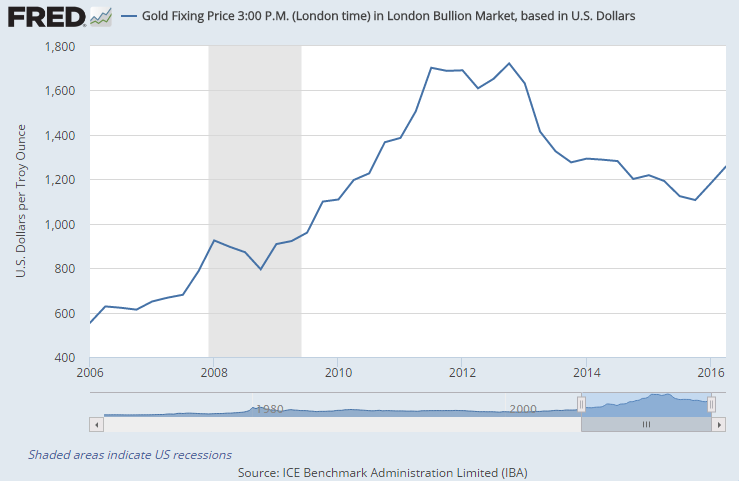
Earlier in the year, the real-estate mogul was leading in the polls for Republican primaries, becoming a true contender in this presidential election. At the same time, gold had its best two quarters in years, rallying nearly 30% since January.

Kitco News looked at this seeming pattern back in May, comparing the data and found that there is somewhat of a positive correlation between the billionaire’s latest poll results and the price of gold this year.

Now that the likelihood of a Trump presidency has dropped, gold prices have also moved lower, falling to two-month lows this week.

Could there be a correlation or is this just mere coincidence?

According to some analysts, it probably is just a fluke.

“It has to be a coincidence, because the market is wise enough to know that Mr. Trump has no chance of becoming the next president and thus cannot and will not affect monetary and/or economic policy here in the U.S. or abroad,” popular newsletter publisher Dennis Gartman told Kitco News Tuesday.

Echobay Partners’ managing partner Vince Lanci echoed Gartman’s comments in that despite the pattern, gold is really being driven by other, “non-election” factors right now.

“I feel gold is more and more a reflection of the slow reality that it doesn’t matter who is president except at the margin. Gold is reacting to the world of NIRP [negative interest-rate policy],” the longtime trader explained.

To Lanci, the best way to explain the parallel between Trump and gold is: investors view that a Trump presidency would bring about uncertainty, which would bode well for the yellow metal.

Regardless, he said it would be a “long shot” for Trump to actually get elected.  Instead, Lanci said he is ignoring the noise surrounding this year’s elections, especially the polling data.

“His odds have dropped on this chart but polling is very unreliable in this election cycle….the election is increasingly digital, based on the last news story on Clinton Foundation or how Donald put his foot in his mouth today.”

Where do gold prices go from here?

“In dollar terms, perhaps quietly higher, with the operative word here being ‘quietly,’” said Gartman.

“In EUR terms, however, I am quite bullish for the European monetary authorities have no choice but to err expansionarily while the monetary authorities here in the States are soon going to err constrictively… leading to higher gold/EUR prices but merely steady gold/dollar prices.”

Lanci said if Democratic nominee Hillary Clinton were to become the next president, stocks would likely rally and gold prices would fall.

“[B]ut that would be a dip to buy as it would be hot money hedgers getting out,” he added.

By Sarah Benali of Kitco News; sbenali@kitco.com

Disclaimer© 2010 Junior Gold ReportJunior Gold Report’ Newsletter: Junior Gold Report’s Newsletter is published as a copyright publication of Junior Gold Report (JGR). No Guarantee as to Content: Although JGR attempts to research thoroughly and present information based on sources we believe to be reliable, there are no guarantees as to the accuracy or completeness of the information contained herein. Any statements expressed are subject to change without notice. JGR, its associates, authors, and affiliates are not responsible for errors or omissions. Consideration for Services: JGR, it’s editor, affiliates, associates, partners, family members, or contractors may have an interest or position in featured, written-up companies, as well as sponsored companies which compensate JGR. JGR has been paid by the company written up. Thus, multiple conflicts of interests exist. Therefore, information provided herewithin should not be construed as a financial analysis but rather as an advertisement. The author’s views and opinions regarding the companies featured in reports are his own views and are based on information that he has researched independently and has received, which the author assumes to be reliable. No Offer to Sell Securities: JGR is not a registered investment advisor. JGR is intended for informational, educational and research purposes only. It is not to be considered as investment advice. Subscribers are encouraged to conduct their own research and due diligence, and consult with their own independent financial and tax advisors with respect to any investment opportunity. No statement or expression of any opinions contained in this report constitutes an offer to buy or sell the shares of the companies mentioned herein. Links: JGR may contain links to related websites for stock quotes, charts, etc. JGR is not responsible for the content of or the privacy practices of these sites. Release of Liability: By reading JGR, you agree to hold Junior Gold Report its associates, sponsors, affiliates, and partners harmless and to completely release them from any and all liabilities due to any and all losses, damages, or injuries (financial or otherwise) that may be incurred.

Forward Looking Statements
Except for statements of historical fact, certain information contained herein constitutes forward-looking statements. Forward looking statements are usually identified by our use of certain terminology, including “will”, “believes”, “may”, “expects”, “should”, “seeks”, “anticipates”, “has potential to”, or “intends’ or by discussions of strategy, forward looking numbers or intentions. Such forward-looking statements involve known and unknown risks, uncertainties and other factors which may cause our actual results or achievements to be materially different from any future results or achievements expressed or implied by such forward-looking statements. Forward-looking statements are statements that are not historical facts, and include but are not limited to, estimates and their underlying assumptions; statements regarding plans, objectives and expectations with respect to the effectiveness of the Company’s business model; future operations, products and services; the impact of regulatory initiatives on the Company’s operations; the size of and opportunities related to the market for the Company’s products; general industry and macroeconomic growth rates; expectations related to possible joint and/or strategic ventures and statements regarding future performance. Junior Gold Report does not take responsibility for accuracy of forward looking statements and advises the reader to perform own due diligence on forward looking numbers or statements.

Live Faster! Spend More!

0

THERE’s nothing much I can say that hasn’t already been said about the Bank of England’s decision to cut the bank rate to a 322-year low of 0.25%,writes Dan Denning at Capital & Conflict.

Full Article: Live Faster! Spend More!

Disclaimer© 2010 Junior Gold ReportJunior Gold Report’ Newsletter: Junior Gold Report’s Newsletter is published as a copyright publication of Junior Gold Report (JGR). No Guarantee as to Content: Although JGR attempts to research thoroughly and present information based on sources we believe to be reliable, there are no guarantees as to the accuracy or completeness of the information contained herein. Any statements expressed are subject to change without notice. JGR, its associates, authors, and affiliates are not responsible for errors or omissions. Consideration for Services: JGR, it’s editor, affiliates, associates, partners, family members, or contractors may have an interest or position in featured, written-up companies, as well as sponsored companies which compensate JGR. JGR has been paid by the company written up. Thus, multiple conflicts of interests exist. Therefore, information provided herewithin should not be construed as a financial analysis but rather as an advertisement. The author’s views and opinions regarding the companies featured in reports are his own views and are based on information that he has researched independently and has received, which the author assumes to be reliable. No Offer to Sell Securities: JGR is not a registered investment advisor. JGR is intended for informational, educational and research purposes only. It is not to be considered as investment advice. Subscribers are encouraged to conduct their own research and due diligence, and consult with their own independent financial and tax advisors with respect to any investment opportunity. No statement or expression of any opinions contained in this report constitutes an offer to buy or sell the shares of the companies mentioned herein. Links: JGR may contain links to related websites for stock quotes, charts, etc. JGR is not responsible for the content of or the privacy practices of these sites. Release of Liability: By reading JGR, you agree to hold Junior Gold Report its associates, sponsors, affiliates, and partners harmless and to completely release them from any and all liabilities due to any and all losses, damages, or injuries (financial or otherwise) that may be incurred.

Forward Looking Statements
Except for statements of historical fact, certain information contained herein constitutes forward-looking statements. Forward looking statements are usually identified by our use of certain terminology, including “will”, “believes”, “may”, “expects”, “should”, “seeks”, “anticipates”, “has potential to”, or “intends’ or by discussions of strategy, forward looking numbers or intentions. Such forward-looking statements involve known and unknown risks, uncertainties and other factors which may cause our actual results or achievements to be materially different from any future results or achievements expressed or implied by such forward-looking statements. Forward-looking statements are statements that are not historical facts, and include but are not limited to, estimates and their underlying assumptions; statements regarding plans, objectives and expectations with respect to the effectiveness of the Company’s business model; future operations, products and services; the impact of regulatory initiatives on the Company’s operations; the size of and opportunities related to the market for the Company’s products; general industry and macroeconomic growth rates; expectations related to possible joint and/or strategic ventures and statements regarding future performance. Junior Gold Report does not take responsibility for accuracy of forward looking statements and advises the reader to perform own due diligence on forward looking numbers or statements.
The Gold Update by Mark Mead Baillie

0

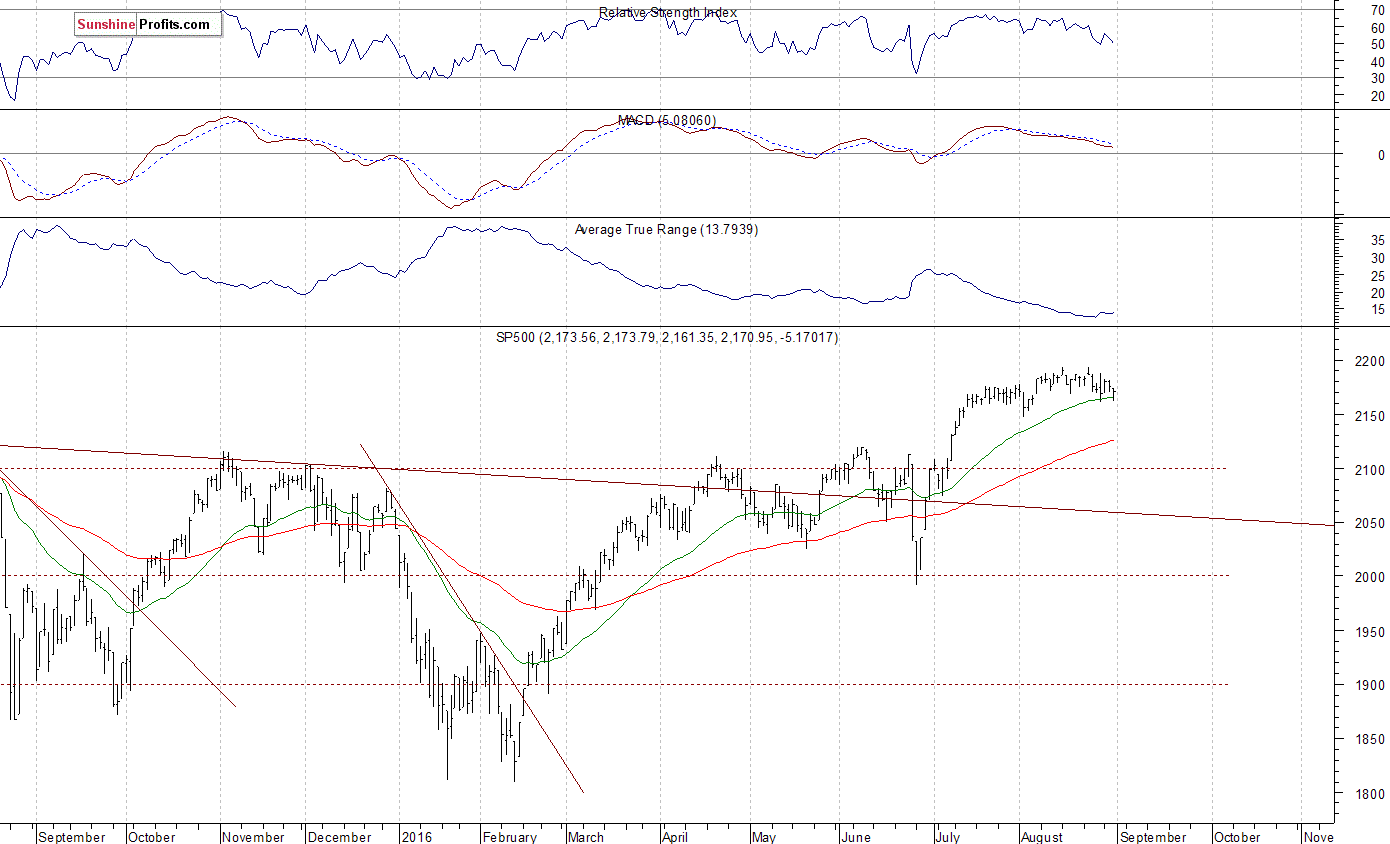
If the final trading day for 2016 had been yesterday (Friday), Gold having settled at 1324 would be (as presently ’tis) a gain of 24.8% for the year, the fifth best annual performance of the last four decades. Yet with over four months still to run in 2016, extrapolate that pace to year’s end and we’d find Gold settling this full year at 1463 for a 37.9% annual gain, its best since 1979.

Full Article The Gold Update by Mark Mead Baillie 

Disclaimer© 2010 Junior Gold ReportJunior Gold Report’ Newsletter: Junior Gold Report’s Newsletter is published as a copyright publication of Junior Gold Report (JGR). No Guarantee as to Content: Although JGR attempts to research thoroughly and present information based on sources we believe to be reliable, there are no guarantees as to the accuracy or completeness of the information contained herein. Any statements expressed are subject to change without notice. JGR, its associates, authors, and affiliates are not responsible for errors or omissions. Consideration for Services: JGR, it’s editor, affiliates, associates, partners, family members, or contractors may have an interest or position in featured, written-up companies, as well as sponsored companies which compensate JGR. JGR has been paid by the company written up. Thus, multiple conflicts of interests exist. Therefore, information provided herewithin should not be construed as a financial analysis but rather as an advertisement. The author’s views and opinions regarding the companies featured in reports are his own views and are based on information that he has researched independently and has received, which the author assumes to be reliable. No Offer to Sell Securities: JGR is not a registered investment advisor. JGR is intended for informational, educational and research purposes only. It is not to be considered as investment advice. Subscribers are encouraged to conduct their own research and due diligence, and consult with their own independent financial and tax advisors with respect to any investment opportunity. No statement or expression of any opinions contained in this report constitutes an offer to buy or sell the shares of the companies mentioned herein. Links: JGR may contain links to related websites for stock quotes, charts, etc. JGR is not responsible for the content of or the privacy practices of these sites. Release of Liability: By reading JGR, you agree to hold Junior Gold Report its associates, sponsors, affiliates, and partners harmless and to completely release them from any and all liabilities due to any and all losses, damages, or injuries (financial or otherwise) that may be incurred.

Forward Looking Statements
Except for statements of historical fact, certain information contained herein constitutes forward-looking statements. Forward looking statements are usually identified by our use of certain terminology, including “will”, “believes”, “may”, “expects”, “should”, “seeks”, “anticipates”, “has potential to”, or “intends’ or by discussions of strategy, forward looking numbers or intentions. Such forward-looking statements involve known and unknown risks, uncertainties and other factors which may cause our actual results or achievements to be materially different from any future results or achievements expressed or implied by such forward-looking statements. Forward-looking statements are statements that are not historical facts, and include but are not limited to, estimates and their underlying assumptions; statements regarding plans, objectives and expectations with respect to the effectiveness of the Company’s business model; future operations, products and services; the impact of regulatory initiatives on the Company’s operations; the size of and opportunities related to the market for the Company’s products; general industry and macroeconomic growth rates; expectations related to possible joint and/or strategic ventures and statements regarding future performance. Junior Gold Report does not take responsibility for accuracy of forward looking statements and advises the reader to perform own due diligence on forward looking numbers or statements.
Is Gold At A Tipping Point? 2 Scenarios For Traders Now

0

By Kira Brecht

(Kitco News) – As traders return to work Monday morning, gold prices have already edged off their overnight lows. Gold buyers are nibbling as the yellow metal drops to test the lower boundary of its two-month trading range.

The news: Fed Chair Janet Yellen’s speech last week triggered renewed speculation that the central bank may raise rates sooner rather than later.

Is it another case of the boy who cried wolf? The renewed hoopla over September being a “live” Fed meeting may well be another case of the boy who cried wolf.

If the Fed is going to raise rates in September, somebody forget to tell the US 10-year note: the yield remains in the same sleepy range between 1.63% and 1.45% that have confined the market since mid-July. The CME’s Fed Watch tool reveals that Fed fund futures are pricing in a 30% probability at the September 21 Federal Open Market Committee meeting.

Even if the Fed does pull the trigger on a .25 basis point rate hike, the official interest rate remains well below historical norms. The federal funds rate stands a 0.25-0.50%. A small blip higher of 0.25% would not mean much in real economic terms, and it would still remain below 1.00%.

Technically Speaking
Gold buyers are supporting the range bottom. Let’s take a look at Figure 1 below. Since late June, Comex December gold futures have shifted into a neutral sideways range bordered by support at $1.314.80 and resistance at $1.384.40.

A potential triangle formation has been developing on the daily chart (seen in red), but gold prices have marginally breached the lower trend line. Significantly, the gold contract, has held above the $1,314.80 range bottom.

Did Janet Trigger Another Buy Spot In Gold?
The burden remains on the bulls to continue to defend retreats to the lower boundary of the two-month range.

Scenario A: If support at the range bottom at $1,314.80 cracks –this would be a bearish short-term signal. The 100-day moving average, shown in blue, stands as next support and a bearish target on a range breakdown at $1,301.70.

Scenario B: If support at the range bottom at $1,314.80 holds firm –this would be a bullish short-term signal. The 20-day moving average, shown in black, stands as a nearby bullish target at $1,346.60.

Gold bulls face some headwinds this week with the strength in the U.S. dollar index and a spate of key U.S. economic reports. Traders will look to Thursday’s ISM release and Friday’s employment report as potential indicators on whether the Fed will hike at its September meeting.

Trading plan: Watch the price chart. Define your trading levels, your price objectives and your stop-loss points. Plan your trade and trade your plan. Gold trade could become volatile this week.

Disclaimer© 2010 Junior Gold ReportJunior Gold Report’ Newsletter: Junior Gold Report’s Newsletter is published as a copyright publication of Junior Gold Report (JGR). No Guarantee as to Content: Although JGR attempts to research thoroughly and present information based on sources we believe to be reliable, there are no guarantees as to the accuracy or completeness of the information contained herein. Any statements expressed are subject to change without notice. JGR, its associates, authors, and affiliates are not responsible for errors or omissions. Consideration for Services: JGR, it’s editor, affiliates, associates, partners, family members, or contractors may have an interest or position in featured, written-up companies, as well as sponsored companies which compensate JGR. JGR has been paid by the company written up. Thus, multiple conflicts of interests exist. Therefore, information provided herewithin should not be construed as a financial analysis but rather as an advertisement. The author’s views and opinions regarding the companies featured in reports are his own views and are based on information that he has researched independently and has received, which the author assumes to be reliable. No Offer to Sell Securities: JGR is not a registered investment advisor. JGR is intended for informational, educational and research purposes only. It is not to be considered as investment advice. Subscribers are encouraged to conduct their own research and due diligence, and consult with their own independent financial and tax advisors with respect to any investment opportunity. No statement or expression of any opinions contained in this report constitutes an offer to buy or sell the shares of the companies mentioned herein. Links: JGR may contain links to related websites for stock quotes, charts, etc. JGR is not responsible for the content of or the privacy practices of these sites. Release of Liability: By reading JGR, you agree to hold Junior Gold Report its associates, sponsors, affiliates, and partners harmless and to completely release them from any and all liabilities due to any and all losses, damages, or injuries (financial or otherwise) that may be incurred.

Forward Looking Statements
Except for statements of historical fact, certain information contained herein constitutes forward-looking statements. Forward looking statements are usually identified by our use of certain terminology, including “will”, “believes”, “may”, “expects”, “should”, “seeks”, “anticipates”, “has potential to”, or “intends’ or by discussions of strategy, forward looking numbers or intentions. Such forward-looking statements involve known and unknown risks, uncertainties and other factors which may cause our actual results or achievements to be materially different from any future results or achievements expressed or implied by such forward-looking statements. Forward-looking statements are statements that are not historical facts, and include but are not limited to, estimates and their underlying assumptions; statements regarding plans, objectives and expectations with respect to the effectiveness of the Company’s business model; future operations, products and services; the impact of regulatory initiatives on the Company’s operations; the size of and opportunities related to the market for the Company’s products; general industry and macroeconomic growth rates; expectations related to possible joint and/or strategic ventures and statements regarding future performance. Junior Gold Report does not take responsibility for accuracy of forward looking statements and advises the reader to perform own due diligence on forward looking numbers or statements.

Can Stocks Survive Without Stimulus?

0

A fiery debate rages among investors over the question of central bank stimulus.  The question is whether the stock market needs stimulus in order to advance, and is stimulus only creating a bubble which will burst at some point and lead to depression?

Regardless of the philosophical rectitude of central bank intervention, there can be no denying its efficacy.  The most fundamental truth of the financial market is that “liquidity, liquidity, liquidity” is the market’s lifeblood.   Financial stimulus contains the seeds of recovery and will cure any bear market in equities, as I’ll attempt to prove in this commentary.  The truth of this assertion can be found in the very wisdom of King Solomon, who in the book of Ecclesiastes wrote that “money answers all things.”  Stocks will always, without exception, respond positively to stimulus – provide there are no countervailing obstacles in the way [e.g. tax increases, margin requirements].

Critics of stimulus often point to Japan as an example of how quantitative easing (QE) supposedly failed.  Seventeen years ago the Bank of Japan (BOJ) led all other central banks by more than a decade with its zero-interest-rate policy, when its benchmark rate was lowered to zero for the first time during March 1999.  As Dr. Ed Yardeni recently observed:

“The BOJ lagged behind the ECB by nearly 20 months, introducing its negative-interest-rate policy (NIRP) on January 29 of this year.  The central bank was early with QE when it expanded its reserves balance starting during November 2001 through January 2006.  That was just a warm-up act for the dramatic expansion of these reserves that started in early 2011, and then went vertical since late 2012.”

While Japan’s economic troubles remain, is it fair to assume that the BOJ’s attempts at stimulus were an abysmal failure?  Let’s examine the evidence.

Following is a long-term graph of Japan’s Nikkei stock index.  Japan’s attempts at QE started in late 2001 and ended in 2006.  Given the downside momentum that had been established in the Nikkei heading into 2001 – 11 years worth to be exact – it took some time before the first effects of the stimulus registered in the stock market.  By 2003, however, the Nikkei was on the up-and-up.  Japan’s central bank let their foot off the QE accelerator between 2006 and 2001, though, and this explains why the rally didn’t continue further.  The 2008 credit crisis only added to the Nikkei’s woes.

nikkei

Then starting in 2011, the BOJ once again commenced QE at an even more furious pace than before.  This led to a much quicker improvement in the Nikkei, which zoomed to its highest level in over a decade.  Undoubtedly, Japan’s second attempt at QE would have been far more successful had not the government implemented an ill-advised tax increase.  This foolish measure heavily undermined the positive impact of QE and put the brakes on the Nikkei rally.  It also put Japan’s economy back into recession for a time.

A lingering problem for the European Union countries since 2008 has been the negative impact of years of misguided austerity policies.  European Central Bank (ECB) President Mario Draghi famously pledged years ago the ECB would do “whatever it takes” to reverse the deflationary undercurrents plaguing the euro zone.  But until this year the ECB failed to live up to that promise.  Late last year Europe’s central bank finally got serious and lowered deposit rates while extending its 80-billion-euro monthly asset purchase program.

Positive results of the bank’s efforts to date haven’t yet been seen, though there are preliminary indications that many European bourses are establishing intermediate-term bottoms.  Much depends on the ECB’s commitment to QE in the year ahead.  By keeping the proverbial pedal to the floor for an extended length of time, the ECB may yet succeed in reversing the continent’s financial malaise.  However, if the bank makes the mistake Japan made by easing up on QE prematurely, the euro zone can expect to see a resumption of the economic malaise.

By far the biggest success story of QE has been the U.S.  The Fed’s unprecedented stimulus measures in the wake of the 2008 credit crash galvanized an historic rally in the stock market which brought recovery to the major indices in record time.  Since the U.S. essentially has a financial economy, any sustained recovery in financial asset prices must of necessity lift the economy sooner or later.  Thus the improvement in many sectors of the economy since 2009 can be attributed, at least in part, to QE.

The evidence to date strongly suggests that stimulus played an integral role in fueling the mighty asset price recovery that began over seven years ago.  The Federal Reserve’s interventionary QE program was successful beyond anyone’s wildest guess when measured by the result of the equity and real estate markets.  And while many are quick to condemn QE as having been a failure at resuscitating the economy, the data would argue otherwise.

But after about six years of easy money, the Fed brought its QE program to a close in late 2014.  After that the stock market as measured by the NYSE Composite Index (NYA), the broadest measure of U.S. equities, entered a prolonged sideways trend, which can largely be attributed to the loss of QE.  The loss of billions of dollars per month of liquidity for stocks was gone and with it the sustained forward momentum that fueled the market’s surge from 2009 to 2014.

nya

Keeping the U.S. market buoyant since then has been a combination of factors.  Continued low interest rates coupled with huge inflows of cash from foreigners seeking a safe haven from the global crisis have been a huge benefit for equities.  The lack of competition from commodities and other assets has also helped.  This influx of foreign “hot” money has amounted to a de facto stimulus for stocks, so in essence the market is still receiving stimulus from afar.

Stocks need stimulus in order to advance in the absence of a strong economy.  When the economy is strong investors need no prodding to put their excess earnings into equities with hopes of greater profits.  A strong economy also breeds confidence in the present and optimism about the future; it serves as a kind of natural stimulus for the stock market.

Ironically, central bank stimulus can also serve as a deterrent for small investors since they interpret the need for stimulus as confirmation that the economy is weak and needs assistance.  Thus the public sometimes lack the incentive to take risks when QE is in full swing.  It’s the professional investor who is sophisticated enough to read between the lines and buy stocks in a weak economy, provided there is stimulus.  This is the great paradox of a stimulus-driven bull market: only the few participate, yet it eventually benefits the many as the wealth generated from higher stock prices permeates the broad economy.

The great unknown factor concerning QE is the outer limit of its success.  Just how successful can QE be in stimulating the economy?  A satisfactory answer to this question hasn’t yet been supplied.  Just when it looked like the financial market rebound from the 2009 low was ready to explode into a full-fledged runaway bull, the Fed took its foot off the accelerator.  Eventually the generous liquidity the Fed was supplying ground to a halt and the stock market responded accordingly as its forward momentum slowed exceedingly.

Central bankers, it seems, have an inveterate fear of inflation.  Most of today’s voting Fed members came of age during the runaway inflation of the 1970s.  The memories of that harrowing experience continue to haunt them, and its influence is reflected in their policies.  The prevailing belief is that too much QE equates to too much inflation.  This is a fallacy.  The U.S. and global economies have been so significantly altered by demographic, social and political shifts in the last two decades that inflation won’t be a major concern for many years to come.

The Fed could have doubled its asset purchases between 2009 and 2014 without creating any appreciable increase in inflation.  Instead it decided to stop QE before inflation even registered, which was tantamount to pushing a stalled vehicle up a hill only to stop pushing before the summit is reached.  It would have been exciting to see just how successful QE could have been had the Fed decided to gun for prosperity.  Instead, the Fed chickened out and ruined its best chance at delineating once and for all the outer limits of central bank stimulus.

The other objection to a full-throttle QE initiative is the widespread fear of creating another asset bubble similar to the real estate bubble that popped in 2006 and led to the credit crisis.  History and human nature testify that a catastrophic crash of the magnitude of the ’08 credit storm takes at least one entire generation (i.e. circa 20 years) to dissipate.  In other words, it takes the advent of an entirely new generation who didn’t experience the crisis to repeat its mistakes.  At present there is a complete absence of risk-taking behavior among the generation that experienced 2008.  That deep-seated fear of risk won’t disappear anytime soon.  Thus the “bubble that broke the world” isn’t going to happen again for a long, long time.

The simple answer to the question, “Can stocks survive without stimulus?” is an emphatic “No!”  Stocks always need fresh injections of liquidity to gain ground and surge ahead.  Whether the stimulus takes the form of QE, fiscal policy or surplus savings is a moot point.  But stimulus in all its many forms must be present to propel equity prices ever higher.  And rising stock prices in a financial economy like the U.S. always creates a wealth effect.  Thus in the final analysis, stimulus is to everyone’s benefit.

The Stock Market Cycles

For the summer months only, the book “The Stock Market Cycles” is available at a special discount to readers of this commentary.  The book reveals the key to interpreting long-term stock price movement and economic performance, namely the famous Kress series of yearly cycles. This work was undertaken based on popular demand and was written in a style that casual readers and experts alike can enjoy and understand. The book covers each one of the yearly cycles in the Kress Cycle series, starting with the 2-year cycle and ending with the 120-year Grand Super Cycle.

The book also covers the K Wave and the effects of long-term inflation/deflation that these cycles exert over stock prices and the economy. Each chapter contains illustrations that show exactly how the yearly cycles influenced stock market performance and explains where the peaks and troughs of each cycle are located and how the cycles can predict future market and economic performance.  Order your autographed copy today:

http://www.clifdroke.com/books/Stock_Market.html

Clif Droke is a recognized authority on moving averages and internal momentum. He is the editor of the Momentum Strategies Report newsletter, published since 1997.  He has also authored numerous books covering the fields of economics and financial market analysis.  His latest book is Mastering Moving Averages. For more information visit www.clifdroke.com

Disclaimer© 2010 Junior Gold ReportJunior Gold Report’ Newsletter: Junior Gold Report’s Newsletter is published as a copyright publication of Junior Gold Report (JGR). No Guarantee as to Content: Although JGR attempts to research thoroughly and present information based on sources we believe to be reliable, there are no guarantees as to the accuracy or completeness of the information contained herein. Any statements expressed are subject to change without notice. JGR, its associates, authors, and affiliates are not responsible for errors or omissions. Consideration for Services: JGR, it’s editor, affiliates, associates, partners, family members, or contractors may have an interest or position in featured, written-up companies, as well as sponsored companies which compensate JGR. JGR has been paid by the company written up. Thus, multiple conflicts of interests exist. Therefore, information provided herewithin should not be construed as a financial analysis but rather as an advertisement. The author’s views and opinions regarding the companies featured in reports are his own views and are based on information that he has researched independently and has received, which the author assumes to be reliable. No Offer to Sell Securities: JGR is not a registered investment advisor. JGR is intended for informational, educational and research purposes only. It is not to be considered as investment advice. Subscribers are encouraged to conduct their own research and due diligence, and consult with their own independent financial and tax advisors with respect to any investment opportunity. No statement or expression of any opinions contained in this report constitutes an offer to buy or sell the shares of the companies mentioned herein. Links: JGR may contain links to related websites for stock quotes, charts, etc. JGR is not responsible for the content of or the privacy practices of these sites. Release of Liability: By reading JGR, you agree to hold Junior Gold Report its associates, sponsors, affiliates, and partners harmless and to completely release them from any and all liabilities due to any and all losses, damages, or injuries (financial or otherwise) that may be incurred.

Forward Looking Statements
Except for statements of historical fact, certain information contained herein constitutes forward-looking statements. Forward looking statements are usually identified by our use of certain terminology, including “will”, “believes”, “may”, “expects”, “should”, “seeks”, “anticipates”, “has potential to”, or “intends’ or by discussions of strategy, forward looking numbers or intentions. Such forward-looking statements involve known and unknown risks, uncertainties and other factors which may cause our actual results or achievements to be materially different from any future results or achievements expressed or implied by such forward-looking statements. Forward-looking statements are statements that are not historical facts, and include but are not limited to, estimates and their underlying assumptions; statements regarding plans, objectives and expectations with respect to the effectiveness of the Company’s business model; future operations, products and services; the impact of regulatory initiatives on the Company’s operations; the size of and opportunities related to the market for the Company’s products; general industry and macroeconomic growth rates; expectations related to possible joint and/or strategic ventures and statements regarding future performance. Junior Gold Report does not take responsibility for accuracy of forward looking statements and advises the reader to perform own due diligence on forward looking numbers or statements.